

APPROVED VENDOR
APPROVED VENDOR
APPROVED VENDOR
| Head Dia. | Shank Dia. | Penny Size | Display Qty | Application | Dia. | Material | Finish | Pack Qty | Price |
|---|---|---|---|---|---|---|---|---|---|
11/32" | 0.148" | 10D | 66 | Cinder Block, Fastening Wood to Concrete, Mortar Joints | 0.148" | Steel | Plain | 66 |
$12.65
|
5/16" | 0.1483" | - | 280 | Attaching Joist Hangers | 0.148" | Steel | Plain | 280 |
$12.65
|
5/16" | 0.1483" | 2D | 173 | Attaching Joist Hangers | 0.148" | Steel | Plain | 173 |
$12.65
|
5/16" | 0.1483" | 3D | 145 | Attaching Furring Strips | 0.148" | Steel | Plain | 145 |
$12.65
|
5/16" | 0.1483" | 6D | 98 | Attaching Furring Strips | 0.148" | Steel | Plain | 98 |
$12.65
|
| Display Qty | Dia. | Head Dia. | Material | Finish | Gauge | Shank Dia. | Penny Size | Pack Qty | Price |
|---|---|---|---|---|---|---|---|---|---|
129 | 0.148" | 5/16" | Steel | Plain | 9 ga. | 0.1483" | 4D | 129 |
$12.65
|
645 | 0.148" | 5/16" | Steel | Plain | 9 ga. | 0.1483" | 4D | 645 |
$54.84
|
| Display Qty | Dia. | Head Dia. | Material | Finish | Gauge | Shank Dia. | Penny Size | Pack Qty | Price |
|---|---|---|---|---|---|---|---|---|---|
76 | 0.148" | 5/16" | Steel | Plain | 9 ga. | 0.1483" | 8D | 76 |
$12.65
|
380 | 0.148" | 5/16" | Steel | Plain | 9 ga. | 0.1483" | 8D | 380 |
$54.84
|
Description
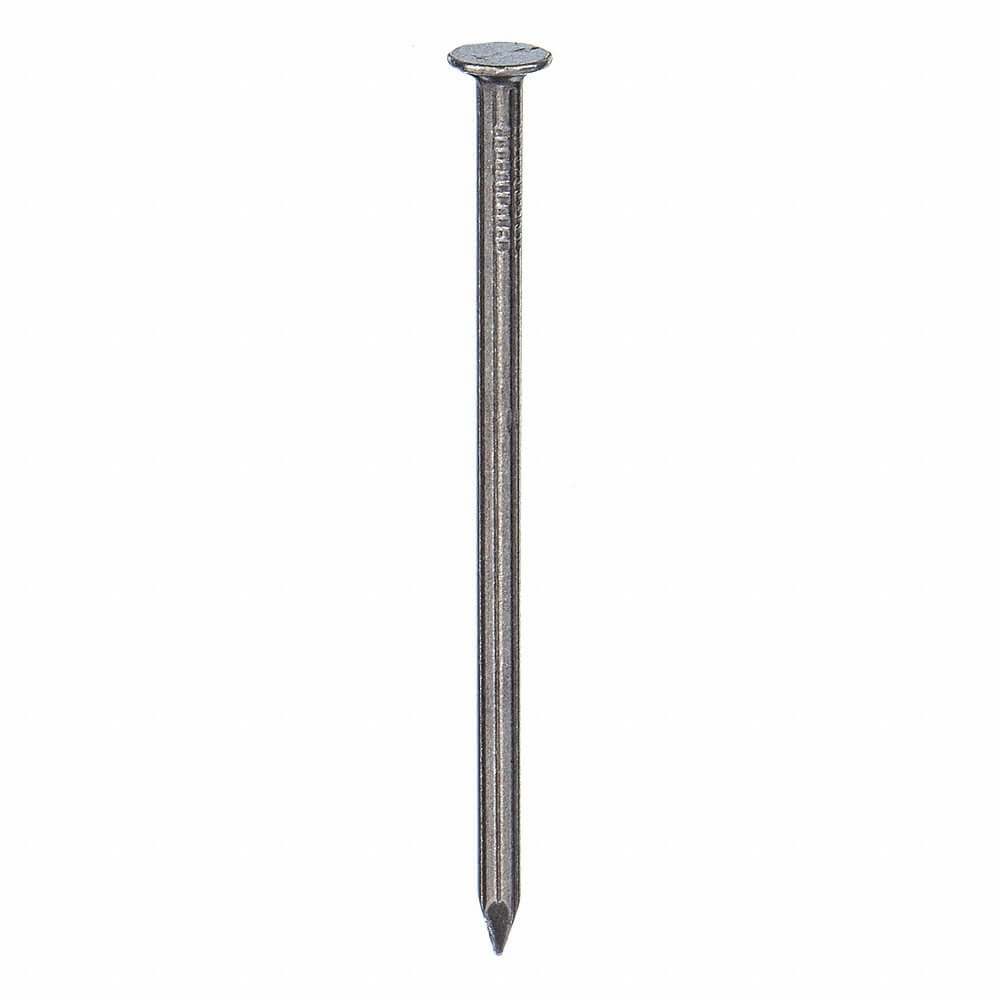
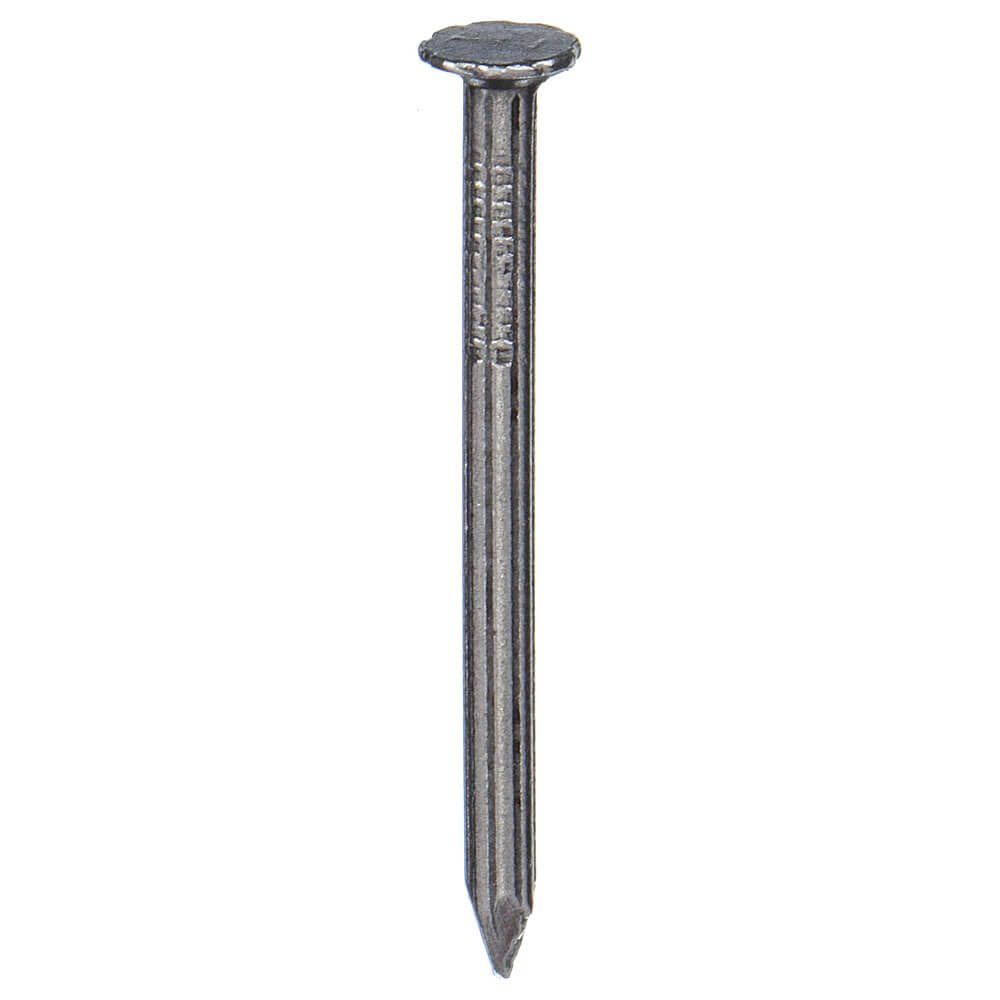
Masonry nails are designed for fixing objects on walls, ceilings and other surfaces. They are suitable for medium-duty loads and are used with bricks / concrete blocks. These thick, fluted brick nails are less likely to loosen or slip when holding an object as they feature grooved shafts. They can be installed using hammer drills, standard drills, masonry drill bits and framing hammers. The flutes on the shank bite into uncured concrete and brick surfaces.
Features
- Masonry nails feature a grooved shaft that clings to the surface to prevent loosening.
- They have a fluted design to provide strong holding power.
- These units feature a flat head for preventing unwanted protrusions.
- They are made of hardened steel having zinc finish for improved strength and abrasion & rust resistance.
- These units are available in lengths ranging from 1 to 3 inches.
Frequently Asked Questions
Q. What points should be kept in mind while using masonry nails?
A.
- It is advisable to use a framing hammer, which is heavier and more substantial than a typical claw hammer.
- Before hammering, drill pilot holes for the nails.
- Use pressure-treated wood for nailing lumber to concrete. Standard lumber may decay due to moisture, which gradually permeates the concrete.
- Furring strips and floor plates can be fastened to uncured concrete with fluted masonry nails if the flooring is not being fastened directly to the wood.
Q. What safety considerations should be followed while using masonry nails?
A.
- Use hearing protection and eye protectors while drilling.
- When drilling in concrete, use a particle mask since cement dust can harm the lungs.
- Do not bend the nails while driving them.
- No amount of pounding would help if the nail stops before its head reaches the surface. Instead, take out the nail and make the hole larger or deeper. After vacuuming the hole, try nailing again.
Q. What tools or equipment can be used for hammering these masonry nails?
A.
- Hammer drill
- Masonry drill
- Particle mask
- Eye protection
- Hearing protection
- Pencil
- Framing hammer
- Vacuum
Q. What is the difference between concrete and masonry nails?
A.
- Masonry nails can be round, square or fluted, whereas concrete nails have fluted shafts.
- Masonry nails are less likely to loosen or slip when holding an object because they feature grooved shafts for gripping brick or concrete surfaces.
- Concrete nails are more expensive, whereas masonry nails are less expensive and less prone to flexing / shattering.
Explore More
- REXXON
- BUCHER HYDRAULICS
- KEYSHAFT
- Panel Saw Accessories
- Pilot Air Control Valves
- Pump Pedestals and Mounting Bases
- Spanner Wrenches
- Solenoid Valves Less Coil
- COOPER B-LINE B-Line Series CT Meter Sockets
- CH HANSON Beaded Chains
- MARATHON MOTORS microMAXTM Inverter Duty Motors, Totally Enclosed, Three Phase
- OMRON Timer Relay 300 Hr. 8 Pin
- SPEEDAIRE Exhaust Deflectors
- LOUISVILLE AE2200 Series Aluminum Extension Ladders
- ANVIL AS200H3 Series Channels With Holes on 3 Sides
- ANSELL 28-360 Activarmr Nitrile Coating Cut Resistant Gloves
- DESTACO 6004 Series Straight Line Action Clamps
- KEO Combined Drills And Countersinks, Jig Bore Type, 60 Degrees Countersink Angle

 ChatMRO